
 By
By 10 retail patterns to see in 2022

Both 2020 and also 2021 were clearly influenced by the pandemic, albeit in various methods.
Throughout 2020, specifically as the COVID-19 dilemma was simply starting, mass closures and also stay-at-home orders wreaked havoc for sellers as the globe attempted to comprehend what preventative measures to take. Much of the year was simply survival setting, as some sellers attracted down money to survive and also others stammering on the brink were tipped right into personal bankruptcy by the unexpected strike to sales and also liquidity.
After a wave of personal bankruptcies in 2020, yet 2021 was calmer because respect. As opposed to personal bankruptcies, the year was noted by purchases, IPOs and also various other deals as the sector maintained a little. The collection of difficulties sellers dealt with as an outcome of the pandemic was various: As opposed to mass short-term closures, sellers invested the year fighting supply chain traffic jams as need came rising back from 2020, and also presenting brand-new benefits to attempt and also lure employees throughout a scarcity.
As we want to the year in advance, we’ll be maintaining our eyes on just how the pandemic remains to effect sellers, together with these 10 patterns.
Stores (if they’re wise) spend greatly in their supply chains
The globe’s supply chain undertook huge anxiety in 2021, unlike anything in contemporary business in its breadth, deepness and also ubiquity. COVID-19 break outs, need rises, capability deficiencies, labor lacks and also various other confounding elements rushed the capacity of numerous to completely equip their racks. Products blockage might reduce in 2022, yet different stress and also high prices might continue past the year.
After a year of emergency situation steps like air delivery and also ship chartering (for those that might manage it), 2022 might be a year for assessing, reassessing and also buying supply chains in the long-term. However will that take place?
As a current paper by FTI’s Christa Hart, Ron Scalzo and also Matt Garfield placed it, “Stores had actually made their supply chains to deal with foreseeable and also particular difficulties yet had actually not sufficiently spent and also undertaken the end-to-end architectural change required to come to be really active.” Taking the biggest dangers out of their supply chains, the writers keep in mind, most likely ways drawing away funding from various other crucial tasks to update the modern technology and also capacities.
Till current years, supply chain has actually usually been an unsexy, underfunded component of the retail company. Absolutely nothing has actually brightened the supply chain’s value rather like the pandemic. With various other dangers along with the pandemic, along with substantial social and also ecological imperatives, there is no much better minute than today to change supply chains in the sector.
Stores have to reconsider their connection with employees
Rare was the retail incomes telephone call that really did not state labor in 2021. Stores had a hard time not just to staff their shops yet additionally their stockrooms and also logistics features, including in the sector’s supply chain concerns for the year.
Some have actually reacted with greater earnings and also various other benefits to pull in prospects. However sellers still lost. Vacation staffing was down 7.5% from 2020. Amongst the jobless, health and wellness concerns were the leading factor for those avoiding of the workforce, along with psychological health and wellness issues and also family members duties.
Unions and also labor lobbyist teams have actually promoted more powerful pandemic defenses for retail employees along with much better settlement for the dangers to frontline and also important employees. At the very same time, the National Retail Federation has actually functioned to obstruct the Biden Management’s injection required focused on lowering the spread of COVID-19.
If labor stays limited in the united state in 2022, sellers might require greater than innovative benefits to win employees. The sector’s long-lasting connection with those that staff its shops and also warehouse might be up for renegotiation.
Exactly how in 2014’s flooding of IPOs will certainly clean
In 2014, a wave of IPOs brushed up the sector as sellers attempted to participate the warm securities market. Most of the 18 retail public listings Retail Dive tracked in 2021 originated from shopping firms.
As these brand names got in the general public markets, their financials came to be public also. For some brand names, these filings explained simply exactly how difficult it is to make a profit while running primarily on-line. While Warby Parker assisted lead the way for various other DTC brand names, it’s dealt with success. Given that monetary 2018, the brand name has actually either reported losses or recovered cost each year. In a similar way, in Rental fee the Path’s S-1, it stated it has a “background of losses,” reporting a bottom line of $171.1 million in 2014.
There were indications of problem in earlier IPOs also. Casper, one more shopping beloved that made its public launching in very early 2020 prior to the pandemic was completely recognized in the united state, revealed in 2021 that it would certainly be taken exclusive once more. The DTC bed mattress brand name in November tattooed a bargain to be gotten by exclusive equity company Durational Resources Administration.
Casper’s 2020 IPO was commonly taken into consideration underwhelming and also its supply rate tanked simply months after going public. While that rate has actually ticked up considering that the reduced of $3.18 a share in March 2020, it has yet to reach its first rate of $14.50 a share.
Until now, most of the DTC brand names that got in the general public markets in 2021 seem matching the very same battles Casper dealt with when it concerns success. However 2022 might be the genuine sign of whether the bed mattress brand name’s public market leave is a one off or an indicator of what’s to find for others.
Will garments’s resurgence stick?
If 2020 appeared to be the year that lastly rounded off garments sales, whose development has actually been dropping for years, 2021 was the year that rejuvenated them.
In 2020, 1.8 million grown-up customers really did not acquire a stitch of clothes, according to research study from The NPD Team. In 2021, greater than 60% of united state customers stated their closets required to be rejuvenated, the company discovered. In the very first 8 months of 2021, garments sellers phoned $13.3 million even more income than they performed in 2019, or 10% even more, according to The NPD Team Customer Monitoring Solution.
The energy proceeded via the vacations, and also scientists at shopping system ChannelAdvisor, in an evaluation of gross product worth, discovered GMV development in garments to be up 31%. That was partially as a result of greater costs. In December, Adobe discovered that on-line garments costs were up 17.3% year over year and also down simply 0.4% month over month, a change from previous years. Given that 2014, on-line garments costs increased by 9% or even more throughout just 3 months (August 2016, January 2020, February 2020). For the 8 months before December, they increased by over 9% each month, per Adobe’s record.
The concern currently is: what to anticipate in 2022? Moody’s anticipates development to solidify rather in retail and also garments following year. However the renewal of the pandemic has actually reestablished a brand-new degree of unpredictability that might impact just how individuals clothe– and also invest.
And Also 2022 might be a year of thinking for brand names like Space and also Banana Republic that were amongst minority resorting to deep discount rates at the vacations.
Rising cost of living might come for customers’ optional funds
Along with a multitude of various other issues customers have, rising cost of living has actually signed up with the checklist. In November, the customer rate index, a crucial step of the price of products, increased at a yearly price of 6.8% prior to seasonal change, according to information from the united state Bureau of Labor Stats.
While various other markets not covered by Retail Dive might really feel the effect of rising cost of living a lot more– such as grocery store and also gas– it might additionally create customers to invest much less on optional products. Currently, online costs increased 3.5% year over year in November– the 18th successive month of year over year rising cost of living, according to information from Adobe’s Digital Consumer price index. Paired with supply chain frustrations, some sellers have actually been treking evaluate of both requirement and also possibility.
If the climbing price of products continues and also the Federal Book elevates rates of interest, customers might lean right into choices to charge card such as buy currently, pay later on to acquire particular products, which might better affect sellers in 2022.
Stores obtain cash from various other solutions
Exactly how do you specify a merchant? The characterization remains to advance, as firms transfer to branch out procedures and also grow varied income streams. It additionally indicates not just using items, yet solutions. As well as, as is significantly the instance, business-to-business solutions.
Take Walmart, for instance. The seller used its shipment system to various other firms through Walmart GoLocal. “In a period where consumers have actually concerned anticipate rate and also dependability, it’s more crucial than ever before for companies to collaborate with a company that comprehends a vendor’s demands,” John Furner, head of state and also chief executive officer of Walmart united state stated in a declaration at the time of GoLocal’s introduction. Firms like Chico’s and also House Depot are currently customers.
In a similar way, ThredUp’s back-end, “resale as a solution” system has actually assisted companions like Madewell, Walmart, Everlane, ebay.com, Farfetch and also Space browse resale. Experts from Wells Fargo price quote that its third-party system, which is anticipated to make as much as $300 million by 2025, might be a lot more rewarding than ThredUp’s pre-owned clothes sales.
Amazon.com, which is understood for its rewarding AWS cloud device, has actually additionally relocated right into various other solution offerings. The firm started marketing its cashierless modern technology to various other sellers, which allows customers to spend for products in physical shops without waiting in line to have a look at.
As the price of running a shop and also shopping procedures remains to raise, it is most likely that these instances are just the begin of sellers relying on various other sorts of solutions to generate sales in the coming year.
Brands pursue the ideal equilibrium of wholesale and also DTC
What portion of sales must originate from direct-to-consumer networks versus wholesale is still a big subject of conversation in retail. Standard sellers are significantly moving their service designs to represent a greater mix of DTC sales, consisting of widely known sports brand names like Nike, Adidas and also Under Armour. While the method can cause greater margins, it does not always make good sense for all sellers to go after. Actually, experts with BMO Resources Markets in September in 2014 examined whether the network was really a lot more successful than wholesale.
The outcome is, somehow, a change towards the center. Some reputable brand names are reducing wholesale companions and also intensifying DTC networks to gain the benefits of both designs, while electronically indigenous brand names are locating worth in increasing via selection wholesale companions along with their very own shopping and also stand-alone shops. DTC activewear brand name Vuori, which has actually paid considering that 2017, associated its economic success partly to a very early begin with calculated wholesale accounts, consisting of Nordstrom and also REI.
That change towards the center is most likely to proceed, with even more brand names trying to discover the ideal equilibrium in between DTC and also wholesale networks in the year in advance. Actually, Coresight Research study forecasted last summertime that brands would rely upon a crossbreed design in between both for the following 3 years.
The objective of a shop remains to advance
20 years of shopping development and also a lot more years of decreases of shopping malls and also the chain store that secure them, have actually led sellers to considerably reduce their shop fleets in the last few years.
Around this time around in 2019, sellers had actually built strategies to completely shut greater than 9,000 shops, much going beyond openings. In 2014, sellers like Nordstrom picked not to resume a few of the places that had actually been secured down for weeks as a result of the pandemic.
In 2014 was various. The variety of closure strategies decreased year over year, according to Coresight Research study. However sellers, in an initiative to make those shops truly count, are additionally reassessing shop layouts– also deserting front runners in many cases– and also changing their places.
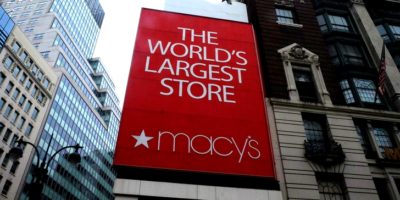
It’s not simply Nike, which has actually currently gone far for itself with extremely experiential and also neighborhood-based shops. Also buck shops are trying out. After an effective launching, Buck General just recently revealed a development of its PopShelf principle, a higher-end warehouse store with a witch hunt charm and also greater rate factors, to 1,000 places over the following 4 years. Macy’s and also its even more high end service, Bloomingdale’s, are both trying smaller sized style shops in strip facilities that are more probable to have a Kohl’s or Target. And Also Footwear Circus, after a collective initiative to shut down underperforming shops, is currently opening up and also redesigning shops, in an initiative to overthrow the discount rate shoes market.
In a pursuit for higher market share, exclusive tags remain to multiply
Gone are the days when sellers connected their names to affordable, simple and also low-grade exclusive tag brand names. Currently sellers deal with exclusive tags as successful development engines that permit them to snatch even more market share. Retail generalists, house sellers, sports sellers and also others have all introduced their very own exclusive brand names and also they do not seem decreasing anytime quickly.
Target expanded its lineup of exclusive brand names to 48 in 2014– 10 of which deserve at the very least a billion bucks. With 8 brand names currently presented in 2014, Bed Bathroom & & Beyond formerly stated it prepares to go for the very least 10 exclusive tags as component of its wider three-year turn-around strategy. Gamers like Foot Storage locker, Penis’s Sporting Product and also Peloton have actually additionally applied their very own exclusive tag approaches.
With rising cost of living holding, exclusive tags might be placed for development as buyers care a lot more regarding obtaining one of the most for their dollar. When the price of products exceeds the development of earnings, exclusive tags might come to be a lot more attracting price-conscious customers.
Apple’s iphone updates rattle sellers’ advertising approaches, specifically for DTC brand names
With Apple’s public launch of the iphone 14.5 upgrade previously this year, the firm needed all applications to take on the AppTrackingTransparency structure. With the upgrade, applications required to request for individual’s authorization to track them or accessibility the tool’s marketing identifier.
This produced troubles for online marketers and also sellers, specifically for direct-to-consumer brand names, which traditionally rely upon third-party information for consumer procurement and also retention.
” Something we’re seeing that’s extremely challenging on the DTC side is that the iphone 14 updates are making it extremely challenging to discover effective roi like we as soon as saw,” Alex Track, chief executive officer of development velocity system DojoMojo, informed Retail Dive in 2021. “What that indicates currently is every person really needs to clamber and also seek brand-new advertising networks that are mosting likely to produce a lot more successful return due to the fact that however, in this minute in time … the great old Facebook, Instagram network as an advertising sector is not as readily available or reputable as it as soon as was.”
Firms are needing to rely on different advertising networks like e-mail, SMS and also also publish marketing to attempt to obtain customers to patronize their brand names
Adhere To.
Daphne Howland.
on.
Twitter.
Adhere To.
Ben Unglesbee.
on.
Twitter.
Adhere To.
Cara Salpini.
on.
Twitter.
Adhere To.
Kaarin Vembar.
on.
Twitter.
Adhere To.
Caroline Jansen.
on.
Twitter.
Adhere To.
Maria Monteros.
on.
Twitter.